IVF Clinic CRM and Lead Management: A Complete Guide
Fertility is a considered purchase made under emotional pressure. Prospective patients research for weeks, contact several clinics, and frequently take months to decide. A clinic that treats an enquiry as a transaction loses most of them; a clinic that treats it as the beginning of a long conversation converts far more of the same traffic.
This guide covers how enquiries should be captured, distributed and followed up, what to measure, and where the line sits between helpful follow-up and pressure that damages trust.
1. Why fertility enquiries behave differently
The decision window is long, the emotional stakes are high, and the person enquiring is often not ready to book. Treating slow responses as low intent is the most common and most expensive misreading in this field.
It also means speed of first response matters more than volume of contact. The clinic that answers thoughtfully within the hour usually beats the clinic that sends five follow-ups over a fortnight.
Further reading: how CRM features change lead management and implementing a CRM across patient management and marketing.
Enquiry quality also varies by channel in ways that confound simple scoring. Someone arriving from a clinical explainer is often further along than someone from a price page, even though the second looks more commercially intent.
2. Capturing the enquiry properly
An enquiry that arrives without a source, a channel and a timestamp cannot be improved on later. Capture is where most measurement problems begin, and no amount of downstream reporting fixes a missing field at the point of entry.
In more detail: streamlining onboarding from the first enquiry and reading the journey through a conversion funnel.
3. Distributing enquiries so none sits unclaimed
The failure mode is not lost enquiries but unowned ones. Round-robin or rules-based allocation matters less for fairness than for making it obvious when nobody has picked something up.
See also: round-robin allotment in practice and moving from enquiry to internal follow-up.
Whatever the rule, the escalation matters more than the allocation. An enquiry that has had no contact within an agreed window should surface to someone senior automatically rather than waiting for a weekly review to notice.
4. Follow-up that helps rather than harasses
There is a real line here. Persistent contact converts in some industries and repels in this one, because the person is deciding something personal. Scheduled, useful follow-up beats frequent follow-up, and the content matters more than the cadence.
More on this: prompting the right action at the right time, task scheduling that stops follow-ups being missed and instant messaging for follow-up.
5. Measuring conversion honestly
Most clinics measure enquiry-to-consultation and stop. The more useful measures are consultation-to-treatment and the time between them, because that is where the decision actually happens and where a clinic can influence it.
Offline conversion is the blind spot. A patient who phones after seeing a page will be attributed to nothing unless someone connects the two.
Further reading: tracking online and offline conversion together and common mistakes in conversion tracking.
Beware of averaging across treatment types. A clinic mixing IUI, IVF and donor programmes has three funnels with different lengths and values, and a blended conversion rate describes none of them.
6. Retention and the value of an existing patient
Fertility patients frequently need more than one cycle, and the decision to continue is made largely on how the first was handled. Retention work here is clinical experience work, not loyalty scheme work.
See also: retention driven from the patient record.
The decision to return is usually made in the weeks after an unsuccessful cycle, not at the point of enquiry for the next one. That places retention work in the clinical follow-up conversation rather than in a later campaign.
7. Groups, partners and referrers
Multi-site groups and referral relationships add a layer: the same person may be known to two sites, and a referrer needs feedback without breaching confidentiality. Both are record-structure problems before they are relationship problems.
In more detail: running enquiries across a clinic chain and collaborating with partner clinics.
8. Remote consultation as an acquisition channel
Virtual first consultations widen the catchment considerably, and they change the funnel: the barrier to a first conversation drops, so more people start and a smaller proportion continue. That is not a decline in quality of enquiry, but it looks like one on a conversion report.
Further reading: telemedicine and access to care, the benefits of running virtual consultations and what telemedicine changes for marketing.
9. Where the CRM meets the clinical record
The handover from enquiry to patient is where clinics most often lose information. If the CRM and the clinical system are separate, the context gathered before treatment rarely survives the transition, and the patient repeats themselves.
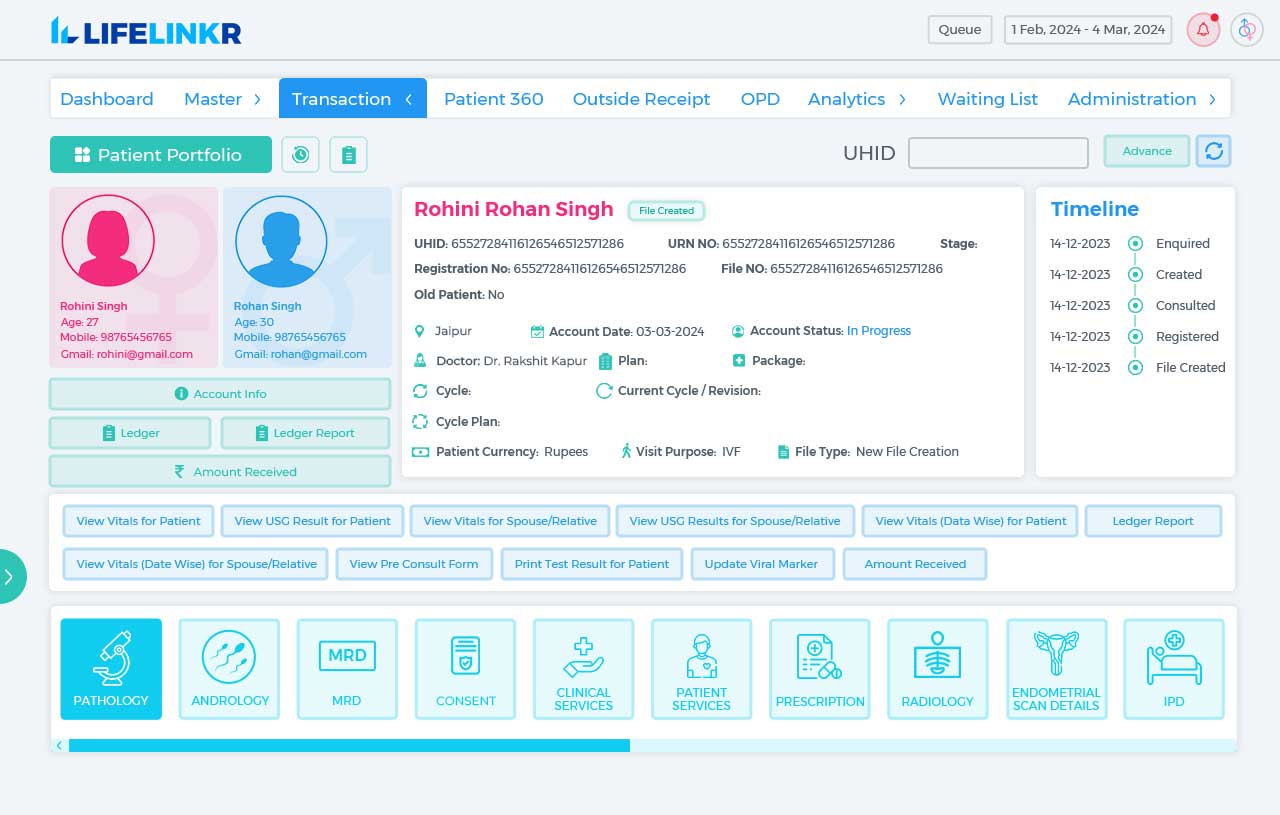
Our enquiry and patient relationship module keeps that history attached rather than discarding it at the point of registration.
See also: using enquiry data alongside clinical outcomes, where CRM interfaces are heading and emerging CRM practice in fertility.
Follow-up messaging overlaps with clinical communication, covered in our patient communication guide. If you want to look at your own enquiry flow, book a session with our team and bring last month’s enquiries.
One practical test: ask whether a clinician can see, at the first consultation, what the patient told the clinic before they registered. If not, the handover is losing context the patient has already given once.