

How Connected Data Improves Everyday Clinical Practice
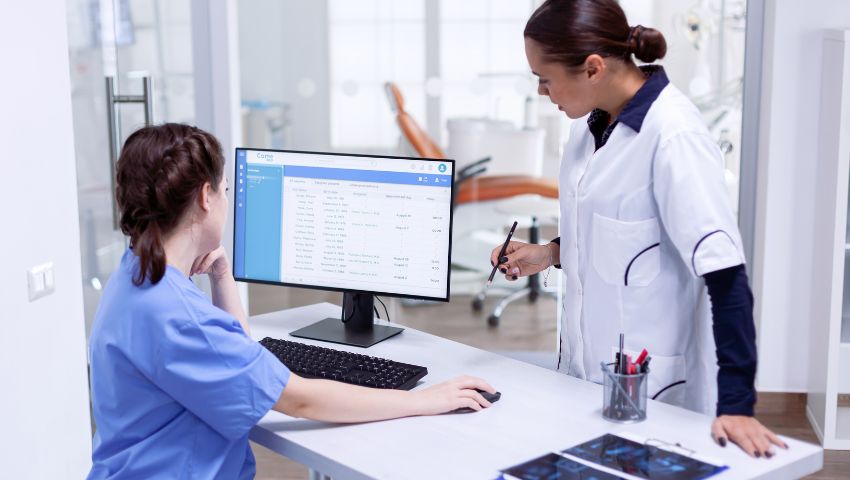
The value of connected data is often discussed in architectural terms, integration, unified timelines, single sources of truth. But for the physician or nurse actually moving through a Tuesday morning of monitoring visits, connected data shows up in much smaller, more concrete ways: not needing to ask a patient to repeat something, seeing a lab result the moment it lands rather than an hour later, catching a trend at a glance instead of piecing it together.
The Everyday Moments Versus the Underlying Architecture
Discussions of connected data often stay at the level of systems design, but the actual payoff shows up in specific, recognizable moments throughout an ordinary clinical day.
Architecture as the Cause, Daily Moments as the Effect
Integration and unified systems are the mechanism, but the reason they matter is entirely about these smaller, concrete moments where a staff member either has what they need instantly or has to go looking for it.
Why Focusing on These Moments Helps
Grounding the discussion in specific daily moments makes the value of connected data tangible in a way that architectural language alone often does not.
A Day Made of Many Small Moments Like These
A typical clinical day is not one big decision but dozens of small ones, each shaped, for better or worse, by whether the relevant data was actually there when it was needed.
The Morning Review Moment Before Visits Begin
Many physicians start their day with a quick review of who they will be seeing, and this moment is either smooth or frustrating depending entirely on data connection.
With Connected Data
A quick scan shows each patient’s current cycle day, most recent result, and any flag, all in one place, taking a few minutes for a full day’s list.
Without It
The same review requires opening several separate systems per patient, multiplying a few minutes into a considerably longer, more tedious start to the day.
Example: The Difference in a Ten Patient Morning
Reviewing ten patients each requiring even two extra minutes of searching across disconnected systems adds twenty minutes to a morning that connected data would have compressed into a fraction of that time.
The Mid Visit Moment When a Patient Asks an Unexpected Question
Patients do not always ask questions the visit was planned around, and how quickly a relevant answer can be found matters in the moment.
With Connected Data
A question about how a current result compares to two cycles ago can be answered on the spot by pulling up the connected history.
Without It
The same question might require telling the patient the answer will need to be looked up and provided later, breaking the flow of the conversation.
The Same Day Decision Moment After a New Result Arrives
As discussed regarding real time clinical updates, this moment depends entirely on how quickly and clearly a new result becomes visible.
With Connected Data
A result appears automatically, already trended against recent values, ready for a quick, confident decision.
Without It
The result has to be actively checked for, manually compared to prior values, and interpreted without the benefit of an automatic trend view.
Practical Note
This specific moment repeats many times across a single monitoring day, meaning its efficiency compounds considerably more than a single instance suggests.
The Handoff Moment at Shift Change
As discussed regarding improving clinical handoffs, this moment depends heavily on whether incoming staff can independently verify status.
With Connected Data
An incoming nurse can pull up a patient’s current status directly, using the verbal handoff to fill in nuance rather than carry the entire informational load.
Without It
The verbal handoff has to convey everything, since there is no reliable, quick way for the incoming staff member to independently verify status themselves.
The Returning Patient Moment After a Long Gap
As discussed regarding long fertility journeys, a patient returning after months or years creates a distinct test of connected data’s value.
With Connected Data
Their full prior history, organized clearly by cycle, is immediately available to inform the new consultation.
Without It
Reconstructing their history may require digging through older records or relying on what the patient themselves can recall.
The Cross Role Moment When a Physician Needs an Embryology Update
As discussed regarding embryology coordination, this specific moment tests how well clinical and lab data actually connect.
With Connected Data
The physician sees the latest embryology update directly within the same patient view, without needing to separately contact the lab.
Without It
Getting this update requires a separate message or call to the embryology team, adding a delay to a decision that may be time sensitive.
The Billing Question Moment at the Front Desk
As discussed regarding front desk and clinical communication, this moment shows how connection benefits roles beyond clinical staff as well.
With Connected Data
Front desk staff can see that a treatment plan changed and understand how that affects current billing, answering the patient’s question accurately in the moment.
Without It
The staff member may need to tell the patient they will need to check with another department and follow up later.
Why This Moment Matters Just as Much as the Clinical Ones
From the patient’s perspective, this interaction carries the same weight as any clinical moment, making its quality just as dependent on connected data.
What These Everyday Moments Actually Have in Common
Looking across all of these specific examples reveals a consistent underlying pattern.
The Difference Between Immediate and Delayed
In every example, connected data turns a moment that would otherwise require a delay, a search, or a follow up, into something that can be resolved immediately, in place.
Immediate Resolution Compounding Across a Day
Each individual moment saved is small, but the cumulative effect across dozens of similar moments in a single day, and across every staff member experiencing them, adds up to something substantial.
Noticing These Moments in Your Own Clinic’s Daily Rhythm
Clinics benefit from actively noticing where these specific moments occur in their own daily operations, rather than only thinking about connection in the abstract.
Asking Staff to Identify Their Own Recurring Friction Moments
Asking staff directly to identify their own version of these recurring moments, the specific point in their day where they wish information were simply already there, surfaces concrete opportunities for improvement.
Prioritizing Connection Where These Moments Happen Most Often
Focusing connection efforts on the specific moments that recur most frequently across a typical day tends to deliver the most noticeable, immediate improvement to daily practice.
