
Managing High-Risk Fertility Cases with Better Clinical Visibility

High-Risk Fertility Cases

Most fertility cases follow a fairly predictable path, but some do not. A patient with a history of ovarian hyperstimulation, a complex clotting disorder, advanced maternal age combined with diminished ovarian reserve, or a prior serious complication requires a different level of attention than a standard case. These high risk patients depend more than anyone on the clinical team having a clear, complete, and immediately accessible view of their situation at every step, since the margin for error is often smaller and the consequences of a missed detail can be more serious.

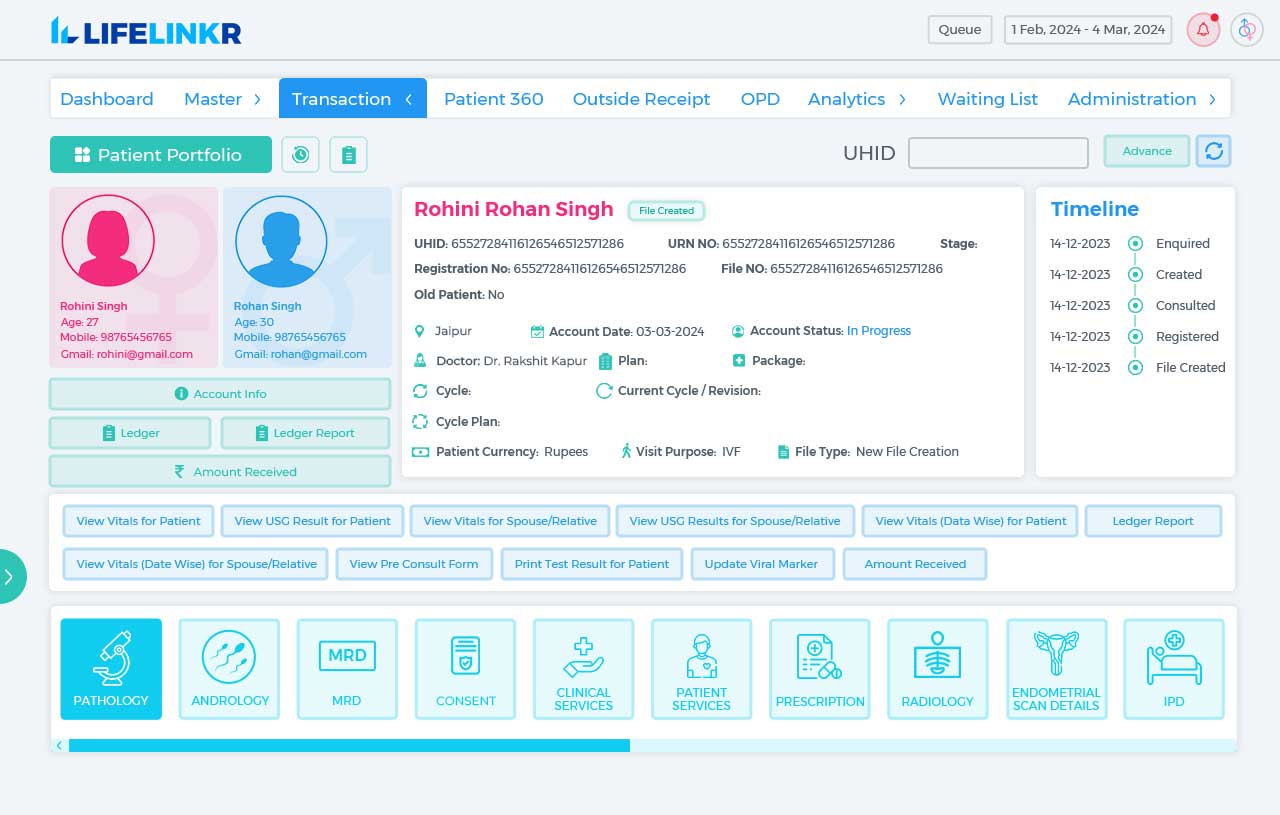
This guide explores what strong clinical visibility means for high-risk fertility cases and how clinics can build the systems and workflows needed to support these patients effectively. IVF software provides complete, real-time patient records, enabling care teams to monitor treatment progress closely, make informed decisions, and reduce the risk of missed critical information.

Table of Contents

What Makes a Fertility Case High Risk

High risk fertility cases share certain features that set them apart from more standard treatment cycles.

Medical Complexity Beyond the Typical Case

Conditions such as a history of severe ovarian hyperstimulation syndrome, significant clotting disorders, or advanced maternal age combined with other risk factors all increase the complexity and risk associated with a given cycle.

Why Complexity Alone Does Not Fully Define Risk

A case can be clinically complex without necessarily being high risk in the sense of carrying elevated potential for serious complications, making it important to distinguish complexity from risk specifically.

History of Serious Complications

A patient with a documented history of a serious complication during a prior cycle generally warrants closer attention and monitoring during any subsequent treatment.

Why Clinical Visibility Matters Even More for High Risk Cases

The consequences of a missed detail or delayed update are generally more serious for high risk patients than for standard cases.

Smaller Margin for Error

High risk patients often have less physiological buffer to absorb a delayed response to a warning sign, making timely visibility into their status especially important.

More Complex Decision Making Requirements

Physicians managing high risk cases typically need to weigh more variables simultaneously, which depends on having a complete, clearly organized view of the patient’s situation.

Example: Monitoring for Hyperstimulation Risk

A patient with a known hyperstimulation risk requires the physician to closely track rapidly changing hormone levels and symptoms together, a task that depends heavily on having all relevant data visible and current at each check in.

Identifying High Risk Patients Early in the Journey

Recognizing a high risk case as early as possible allows the clinical team to plan and monitor accordingly from the outset.

Reviewing History Thoroughly at Intake

A thorough review of a patient’s medical history and any prior complications during the initial consultation helps identify risk factors before treatment begins.

Recognizing Risk Factors That Emerge Mid Treatment

Some risk factors only become apparent partway through a cycle, such as an unusually strong hormonal response, requiring ongoing vigilance rather than a one time assessment at intake alone.

Practical Note

High risk status is not always known from the start. Clinics need processes that can recognize and respond to emerging risk, not just risk identified during the initial workup.

Flagging High Risk Status Clearly Across the Record

Once identified, high risk status needs to be visible to anyone interacting with the patient’s record, not buried within a lengthy note.

Prominent, Consistent Flagging

A clear, consistently placed flag indicating high risk status ensures any staff member reviewing the chart immediately understands the need for heightened attention.

Specifying the Nature of the Risk

Beyond a general flag, the record should clearly specify what particular risk factor applies, since different high risk conditions require different specific monitoring approaches.

Why Specificity Matters Here

A generic high risk flag without detail leaves staff unsure exactly what to watch for, while a specific flag guides more targeted, appropriate attention.

Adjusting Monitoring Intensity for High Risk Cases

High risk patients often benefit from a more intensive monitoring approach than a standard case would require.

More Frequent Check Ins

Depending on the specific risk factor, more frequent monitoring visits or lab checks may be warranted to catch a developing issue as early as possible.

Lower Thresholds for Escalation

High risk cases may warrant a lower threshold for escalating a borderline finding to the physician, given the reduced margin for error involved.

Ensuring Cross Team Visibility for Complex Cases

High risk cases often benefit from especially strong visibility across every role involved in the patient’s care.

Ensuring Every Team Member Understands the Risk Profile

Nurses, embryologists, and front desk staff who interact with a high risk patient should all have an appropriate, role specific understanding of relevant risk factors.

Avoiding Gaps When Staff Change

High risk status and relevant context need to transfer clearly during any handoff, since these are exactly the cases where an information gap carries the most serious potential consequences.

Why This Requires Extra Diligence

Standard handoff practices that might be adequate for a routine case may not provide enough detail or emphasis for a high risk patient, warranting a more thorough handoff specifically for these cases.

Building Rapid Escalation Paths for Warning Signs

High risk cases benefit from an especially fast, clear escalation process when a concerning sign appears.

Predefined Escalation Criteria

Establishing clear, agreed upon criteria for what specifically warrants immediate escalation for a given high risk condition removes ambiguity for staff in the moment.

Fast, Direct Access to the Responsible Physician

For high risk cases specifically, staff should have a fast, direct way to reach the physician managing that patient, without unnecessary steps that could delay an urgent conversation.

Documenting Risk Specific Context Clearly

Beyond flagging that a case is high risk, documentation should capture the specific context that makes it so.

Recording the Specific History Behind the Risk

Clear documentation of exactly what prior complication or condition underlies a patient’s high risk status helps every provider understand the full picture, not just that elevated caution is warranted.

Updating Risk Documentation as the Situation Evolves

If a patient’s risk profile changes during treatment, whether improving or worsening, that update should be clearly reflected in the documentation promptly.

Coordinating Visibility With Outside Specialists

Many high risk fertility cases involve coordination with outside specialists, such as a hematologist for a clotting disorder or a maternal fetal medicine specialist.

Sharing Relevant Information With External Providers

Ensuring outside specialists have access to relevant fertility treatment context supports more informed guidance from their side of the patient’s care.

Integrating External Guidance Into the Fertility Care Plan

Recommendations from an outside specialist need to be clearly documented and integrated into the fertility clinic’s own treatment plan and monitoring approach.

Why This Coordination Matters Especially for High Risk Cases

High risk patients often depend on multiple specialists working from a shared, accurate understanding of their situation, making this coordination more consequential than in more straightforward cases.

The Role of Technology in Supporting High Risk Case Visibility

The right systems can meaningfully strengthen visibility specifically for high risk patients.

Automated High Risk Flagging and Alerts

Systems that automatically display a high risk flag prominently, along with relevant specifics, whenever a patient’s chart is opened help ensure this context is never missed.

Configurable Monitoring Thresholds

Software that allows monitoring thresholds and escalation triggers to be adjusted for specific high risk patients supports the more intensive oversight these cases often require.

Why This Capability Matters for Personalized Risk Management

Different high risk conditions warrant different specific thresholds, making configurable systems more useful than a single, generic monitoring approach applied uniformly to every patient.

Frequently Asked Questions

What generally makes a fertility case high risk?

Factors such as a history of severe ovarian hyperstimulation, significant clotting disorders, or a documented complication from a prior cycle typically place a case into a higher risk category.

Why does clinical visibility matter even more for high risk patients?

These patients often have a smaller margin for error, meaning a delayed response to a warning sign can have more serious consequences than in a standard case.

How can clinics identify high risk patients as early as possible?

A thorough history review during the initial consultation, combined with ongoing vigilance for risk factors that emerge mid treatment, helps identify high risk status early.

Why does high risk status need to be clearly flagged and specific in the record?

A generic flag without detail leaves staff unsure exactly what to watch for, while specifying the particular risk factor guides more targeted, appropriate attention.

How should monitoring differ for high risk cases?

High risk cases often warrant more frequent check ins and a lower threshold for escalating a borderline finding to the physician, given the reduced margin for error involved.

Why is cross team visibility especially important for high risk cases?

Every role interacting with a high risk patient benefits from an appropriate understanding of their risk profile, and any information gap during a handoff carries more serious potential consequences.

How should clinics handle coordination with outside specialists for high risk cases?

Sharing relevant fertility treatment context with outside specialists, and clearly integrating their guidance into the fertility care plan, supports more informed, coordinated care.

How does technology support better visibility for high risk fertility cases?

Automated flagging with specific risk details, along with configurable monitoring thresholds, help ensure high risk context is never missed and that oversight matches each patient’s specific needs.

PR & Marketing Manager at LifeLinkr, leading brand communication and strategic campaigns in the IVF industry to enhance engagement and drive impactful growth.