



User interface design challenges in healthcare systems
Table of Contents
- Introduction
- The Core Problem: Healthcare UI Design Challenges
- The Human Cost of Poor Design
- Key Challenges in Clinical Interfaces
- Deep Dive: UX Challenges in Healthcare
- Electronic Health Record UI Problems
- What Good Healthcare UI Design Looks Like
- FAQs
- Conclusion
Introduction
Healthcare software sits at a curious and troubling intersection: systems that handle the most consequential decisions in human life are routinely rated among the most difficult to use. Emergency physicians often toggle between multiple tabs just to find a patient’s medication history, while nurses spend a large portion of their time documenting instead of providing care. Radiologists and specialists frequently miss critical alerts buried within complex notification systems.
The stakes could not be higher. Poor UI design in healthcare is not merely frustrating. It directly impacts patient safety. A misread dropdown, a skipped alert, or a confusing navigation path can translate into delayed treatment or incorrect clinical decisions. In such environments, even small usability issues can have serious consequences.
As healthcare becomes increasingly digitized, the role of interface design continues to grow. Systems are expected to handle complex workflows, integrate multiple data sources, and support real time decision making. This makes usability not just a design concern, but a critical component of clinical performance.
The Core Problem: Healthcare UI Design Challenges
Healthcare systems are traditionally built with a focus on regulatory compliance, billing requirements, and documentation standards. Clinical workflow and usability often come later in the design process. This results in interfaces that are technically complete but difficult to navigate.
Doctors and clinical staff are required to work within these systems regardless of how intuitive they are. Unlike consumer software, where users can switch platforms, healthcare professionals must adapt to the tools available to them. This creates an environment where inefficiencies become normalized.
The result is a system that prioritizes data capture over usability. Instead of supporting clinical reasoning, these interfaces often interrupt it, forcing users to spend time managing the system rather than focusing on patient care.
The Human Cost of Poor Design
The impact of poor interface design extends beyond inconvenience. It affects both clinicians and patients in measurable ways. Healthcare professionals experience increased stress, reduced efficiency, and higher levels of burnout when working with complex systems.
- Increased burnout among healthcare professionals due to repetitive and inefficient workflows
- Higher risk of missed or ignored alerts that may contain critical information
- Reduced time available for direct patient interaction and care
- Greater likelihood of documentation errors and clinical mistakes
These challenges highlight the importance of designing systems that support users rather than hinder them. When clinicians spend more time navigating software than treating patients, the entire healthcare system becomes less effective.
Key Challenges in Clinical Interfaces
Healthcare UI design is uniquely complex due to the nature of clinical environments. Several structural challenges make it difficult to create simple and effective interfaces.
- Alert fatigue and notification overload: Clinicians receive a high volume of alerts daily, making it difficult to identify critical ones
- High information density: Patient records include years of medical data that must be presented clearly
- Workflow misalignment: Systems are often designed around administrative processes rather than clinical workflows
- Multiple user roles: Doctors, nurses, and administrative staff all require different views of the same data
- Fragmented integrations: Data is spread across multiple systems with inconsistent interfaces
Addressing these challenges requires a shift in design approach, focusing on usability and real world workflows.
Deep Dive: UX Challenges in Healthcare
Healthcare UX challenges go beyond visual design. They involve how information is structured, accessed, and used in real time. Poorly designed systems create friction that slows down clinical processes.
One common issue is the documentation burden. As regulatory requirements increase, clinicians are required to enter more data into the system. This often results in long and complex records that are difficult to read and analyze.
Another issue is alert desensitization. When clinicians are exposed to too many low priority alerts, they begin to ignore them. This increases the risk of missing critical warnings.
Additionally, inefficient data presentation can make it difficult to identify important information. When key details are buried within large datasets, decision making becomes slower and less accurate.
Electronic Health Record UI Problems
Electronic health record systems are central to modern healthcare, but they often suffer from usability issues. These systems are designed to capture large amounts of data, but not always to present it effectively.
- Non contextual data presentation that requires users to search for relevant information
- Excessive mandatory fields that slow down workflows
- Poor error handling that makes it difficult to correct mistakes
- Limited mobile optimization, reducing usability in real world clinical settings
These issues highlight the need for better design practices that focus on user experience and efficiency.
What Good Healthcare UI Design Looks Like
Effective healthcare UI design focuses on clarity, usability, and efficiency. Systems should present the most relevant information based on the clinical context and user role.
- Context aware data presentation that highlights important information
- Role based interfaces tailored to different users
- Improved alert systems that prioritize critical notifications
- Continuous usability testing with real users
- Accessible design that supports diverse patient populations
By focusing on these principles, healthcare systems can become more effective and easier to use.
FAQs
Why is UI design important in healthcare?
It directly impacts patient safety, clinical efficiency, and decision making.
What is the biggest challenge in healthcare dashboards?
Managing large volumes of data while keeping the interface simple and easy to use.
How does poor UI affect doctors?
It increases cognitive load, causes burnout, and slows down workflows.
What is alert fatigue in healthcare systems?
It occurs when too many alerts cause clinicians to ignore important notifications.
How can healthcare systems improve usability?
By focusing on clear design, prioritization of data, and alignment with clinical workflows.
Conclusion
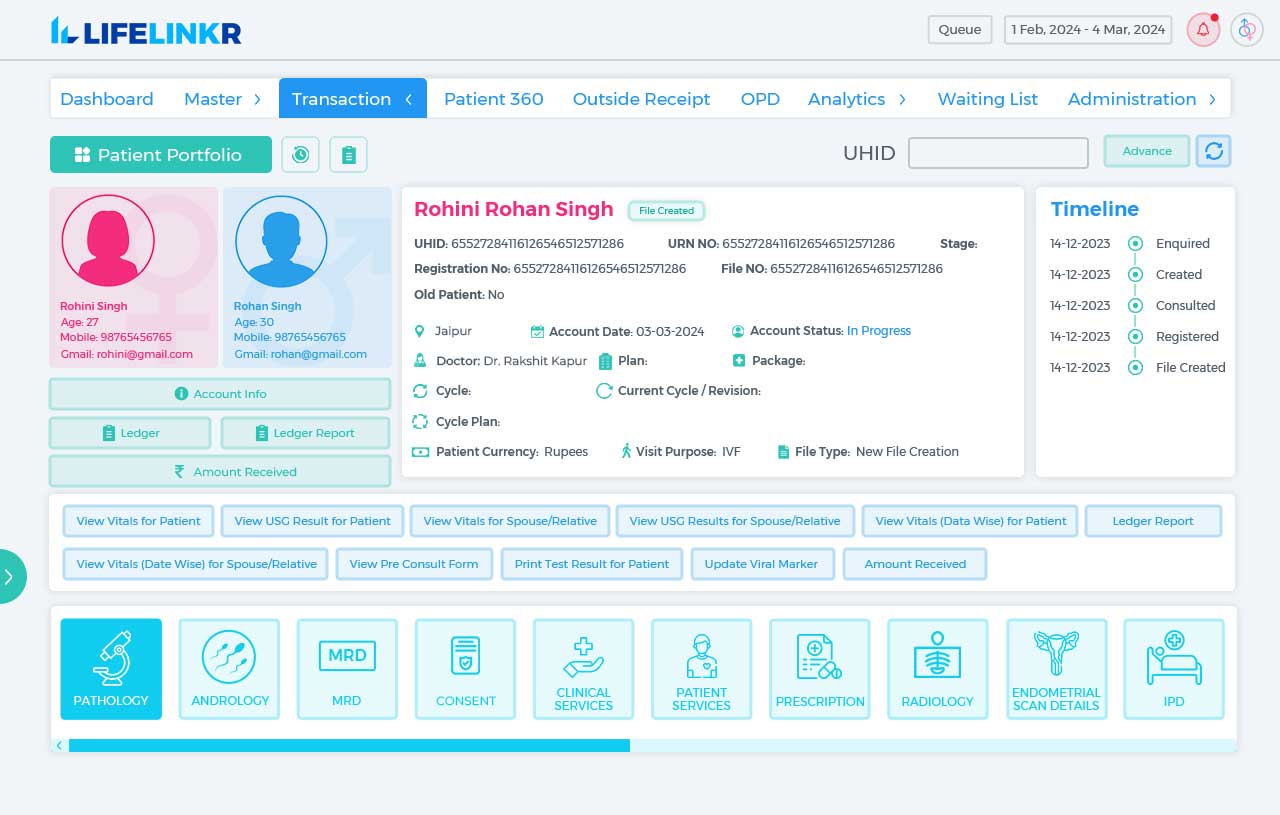
Healthcare UI design is not optional—especially in the context of IVF software, where precision, timing and coordination are critical. It directly impacts patient safety, clinical efficiency and treatment outcomes. By focusing on usability and aligning systems with real-world fertility workflows, healthcare organizations and IVF clinics can create more intuitive and reliable digital experiences for clinicians, embryologists and patients alike. As technology continues to evolve, prioritizing user-centered design in IVF software will be essential for building effective, scalable, and trustworthy healthcare systems.