



Coordinating lab procedures and clinical appointments through digital systems
Table of Contents
- Introduction
- Why Coordination Between Lab and Clinical Teams Matters
- Understanding Lab and Clinical Workflows
- Aligning Lab Procedures With Clinical Appointments
- Managing Scheduling Dependencies
- Importance of Real Time Updates and Visibility
- Improving Communication Across Departments
- Enhancing the Patient Treatment Journey
- Using Automation to Coordinate Tasks
- Supporting Reporting and Operational Insights
- Role of Digital Systems in Coordination
- Common Challenges in Coordination
- Examples of Lab and Clinical Coordination Points
- FAQs
- Conclusion
Introduction
Fertility treatment requires precise coordination between laboratory procedures and clinical appointments. Patients move through a series of interconnected steps, including monitoring visits, egg retrieval, fertilization, embryo development and embryo transfer. Each step depends on the successful completion of the previous one, making coordination essential for effective treatment delivery.
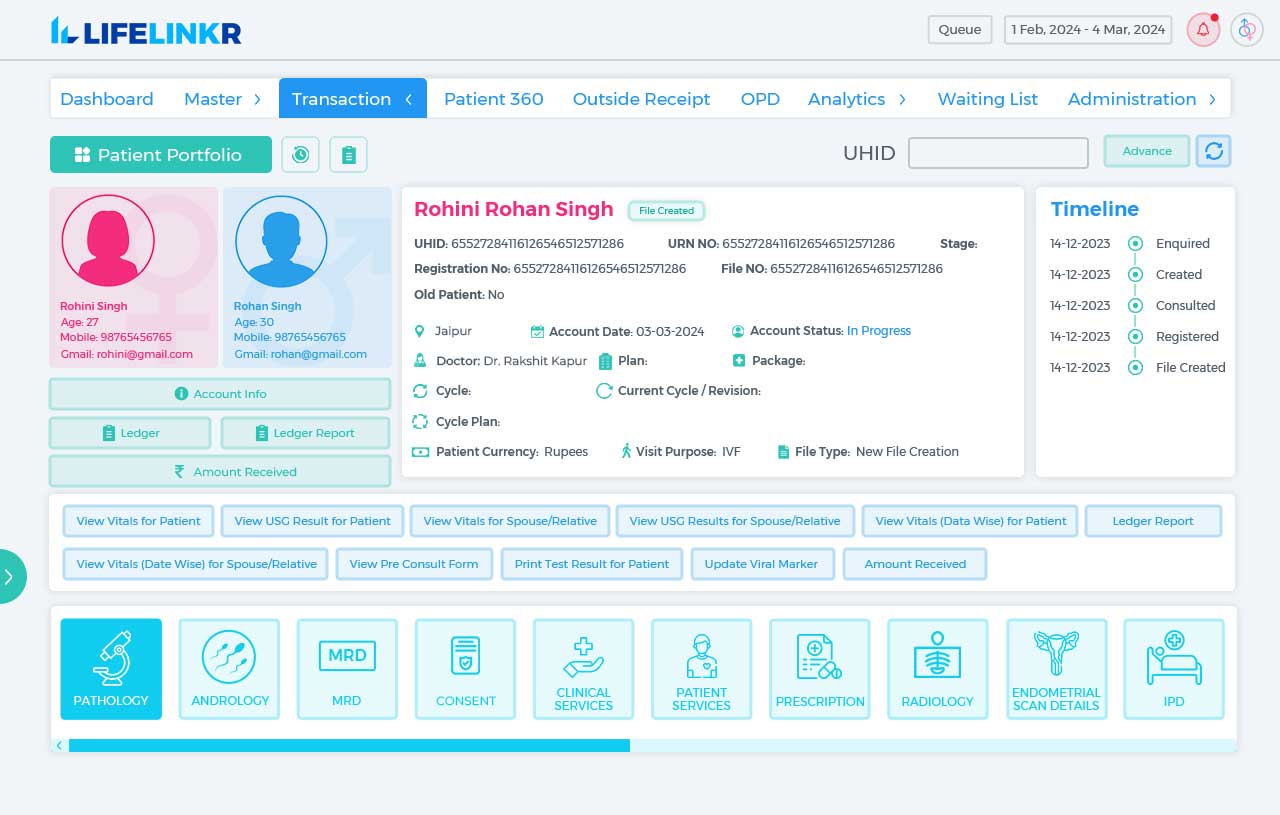
Digital systems, especially IVF software, play a key role in aligning laboratory and clinical workflows. By connecting scheduling, patient records and laboratory updates within a single platform, clinics can ensure that procedures and appointments occur in the correct sequence. This coordination reduces delays, improves communication, enhances data accuracy and ultimately improves the overall patient experience.
Why Coordination Between Lab and Clinical Teams Matters?
Laboratory teams and clinical teams operate in different environments but must work closely together. Lab procedures generate data that directly influences clinical decisions, while clinical schedules determine when lab activities take place.
Effective coordination helps clinics:
- Ensure timely execution of procedures
- Reduce scheduling conflicts
- Improve treatment accuracy
- Enhance patient care quality
- Minimize operational delays
Without proper coordination, treatment timelines can be disrupted.
Understanding Lab and Clinical Workflows
Clinical workflows involve patient consultations, monitoring visits, and treatment planning, while laboratory workflows focus on fertilization, embryo development, and cryostorage.
These workflows intersect at key points, such as:
- Egg retrieval procedures
- Fertilization processes
- Embryo transfer appointments
Understanding these intersections is essential for effective coordination.
Aligning Lab Procedures With Clinical Appointments
Lab procedures must be carefully aligned with clinical appointments. For example, egg retrieval must be scheduled in coordination with laboratory availability, and embryo transfer must align with embryo development timelines.
Digital systems allow clinics to link appointments with corresponding lab procedures, ensuring that both occur in sync.
Managing Scheduling Dependencies
Fertility treatments involve multiple dependencies between appointments and procedures. A delay in one step can affect the entire treatment cycle.
Managing these dependencies requires:
- Clear scheduling rules
- Defined treatment pathways
- Flexible rescheduling capabilities
Structured scheduling ensures that each step follows the correct sequence.
Importance of Real Time Updates and Visibility
Real time updates are critical for coordinating lab and clinical activities. When lab results are updated instantly, clinicians can make timely decisions and adjust treatment plans as needed.
Real time visibility helps:
- Reduce delays in decision making
- Improve workflow efficiency
- Ensure accurate treatment timing
Immediate access to information supports smoother operations.
Improving Communication Across Departments
Effective communication between lab and clinical teams is essential for coordinated care. Digital systems provide shared platforms where both teams can access the same information.
This improves:
- Information sharing
- Task coordination
- Error reduction
Clear communication helps teams work together more effectively.
Enhancing the Patient Treatment Journey
Coordinated workflows create a smoother patient experience. When appointments and procedures are aligned, patients experience fewer delays and clearer communication.
Benefits for patients include:
- Reduced waiting times
- Better understanding of treatment steps
- Improved confidence in care
A well coordinated system improves overall patient satisfaction.
Using Automation to Coordinate Tasks
Automation within digital systems can help manage complex scheduling and workflow coordination. Systems can automatically trigger tasks, reminders, and updates based on treatment progress.
Automation features may include:
- Automatic appointment scheduling
- Procedure reminders for staff
- Alerts for upcoming lab activities
Automation reduces manual effort and improves efficiency.
Supporting Reporting and Operational Insights
Coordinated data from lab and clinical workflows supports better reporting and analysis. Clinics can evaluate performance metrics such as treatment timelines, procedure efficiency, and success rates.
These insights help identify areas for improvement and optimize workflows.
Role of Digital Systems in Coordination
Digital systems provide the infrastructure needed to connect lab procedures with clinical appointments. By integrating scheduling, patient records, and laboratory data, these systems create a unified workflow.
This integration ensures that all teams operate with the same information and follow consistent processes.
Common Challenges in Coordination
Clinics may face challenges when coordinating lab and clinical workflows, including:
- Scheduling conflicts between departments
- Delayed lab updates
- Communication gaps
- Manual workflow management
Addressing these challenges requires structured systems and clear processes.
Examples of Lab and Clinical Coordination Points
| Clinical Appointment | Lab Procedure | Coordination Benefit |
|---|---|---|
| Monitoring visit | Hormone analysis | Accurate treatment adjustments |
| Egg retrieval | Fertilization | Seamless workflow transition |
| Embryo transfer | Embryo selection | Improved success rates |
| Follow up visit | Outcome tracking | Complete patient records |
FAQs
Why is coordination between lab and clinical teams important?
It ensures that treatment steps are aligned, reducing delays and improving patient outcomes.
How do digital systems improve coordination?
They connect scheduling, lab data, and patient records, enabling real time updates and better communication.
Can automation help manage workflows?
Yes. Automation simplifies scheduling, sends reminders and ensures tasks are completed in the correct order.
Conclusion
Coordinating lab procedures and clinical appointments through digital systems is essential for delivering efficient and high quality fertility care. By aligning workflows, improving communication and leveraging automation, clinics can ensure that treatment steps occur seamlessly. As fertility care becomes more complex, integrated digital systems will play a vital role in maintaining coordination, improving outcomes and enhancing the patient experience.