



How IVF clinics unintentionally waste high value clinical time
Table of Contents
- Introduction
- What High Value Clinical Time Really Means
- Where Time Waste Hides in IVF Clinics
- Administrative Overload on Clinicians
- Inefficient Scheduling and Gaps
- Poor Handoffs and Repeated Clarifications
- Unstructured Meetings and Interruptions
- Lab Coordination Delays
- Redundant Documentation
- Slow Decision Loops
- The Real Cost of Wasted Clinical Time
- Why Waste Increases as Clinics Grow
- How to Protect High Value Clinical Time
- High Value vs Low Value Time in IVF Clinics
- FAQs
- Conclusion
Introduction
In IVF clinics, clinical expertise is the most valuable resource. Embryologists, reproductive specialists, and senior nurses carry years of training, precision skills, and decision-making responsibility. Their time directly influences patient outcomes, safety, and trust.
Yet many clinics unintentionally waste high-value clinical time on tasks that do not require that level of expertise. The waste is rarely dramatic. It hides in repeated clarifications, avoidable meetings, documentation duplication, scheduling inefficiencies, and informal coordination.
Over time, these small inefficiencies compound. They reduce patient capacity, increase burnout, create delays, and limit growth. Protecting high-value clinical time is not about pushing clinicians to work faster. It is about redesigning workflows so expertise is used only where it truly matters.
What High Value Clinical Time Really Means?
High value clinical time refers to activities that directly influence patient outcomes and require specialised expertise. This includes:
- Clinical decision making
- Embryo assessment and lab procedures
- Patient consultations requiring judgement
- Complex case discussions
When highly trained professionals spend time on scheduling issues, chasing paperwork, or correcting avoidable errors, the clinic misallocates its most expensive and scarce resource.
Where Time Waste Hides in IVF Clinics?
Time waste rarely appears as a single large failure. Instead, it hides in daily routines:
-
A five-minute delay between appointments
-
A missing consent form
-
A lab instruction clarified twice
-
A meeting without a clear outcome
-
A phone call to correct a scheduling mismatch
Individually, these moments seem small. Collectively, across weeks and teams, they consume hours of valuable clinical capacity.
Administrative Overload on Clinicians
Many IVF clinicians spend significant time on documentation, billing clarifications, coordination messages, and system navigation. While documentation is necessary, duplication and manual data entry often consume disproportionate time.
Highly trained doctors and embryologists end up acting as administrators. This reduces both efficiency and job satisfaction. Administrative work should support care, not compete with it.
Inefficient Scheduling and Gaps
Scheduling directly shapes clinical productivity. Poorly designed schedules create:
-
Idle gaps between consultations
-
Overbooked sessions with rushed care
-
Lab-clinic mismatches
-
Last-minute rescheduling
Idle time reduces revenue per clinician hour. Overbooking increases stress and reduces quality. Effective scheduling protects focus time and aligns consultations with laboratory readiness.
Poor Handoffs and Repeated Clarifications
Every patient journey involves multiple handoffs. Information flows from front desk to clinician to lab and back again.
When documentation is incomplete or unclear, clinicians must seek clarification. Missing lab notes, unclear patient preparation instructions, or undocumented decisions create rework.
Each interruption breaks concentration and reduces high-value thinking time.
Unstructured Meetings and Interruptions
Meetings are necessary, but poorly structured meetings waste time. Without clear agendas, defined outcomes, or role clarity, discussions drift into updates that could have been shared digitally.
Frequent interruptions fragment attention. Even short disruptions reduce productivity long after the interruption ends.
Lab Coordination Delays
In IVF clinics, clinical and laboratory coordination is critical. Small misalignments create cascading delays:
-
Last-minute cycle changes
-
Unclear timing instructions
-
Incomplete case documentation
When systems lack clarity, senior clinicians step in to manually coordinate. This reactive effort protects care quality but consumes valuable time.
Redundant Documentation
Multiple systems, manual logs, and repeated entries often require clinicians to document the same information more than once.
Redundancy increases error risk and consumes time that should be dedicated to patient care. Documentation should be streamlined and structured, not repetitive.
Slow Decision Loops
When decision authority is unclear, clinicians wait for approvals or escalate minor issues unnecessarily.
Slow decision loops create idle time, frustration, and delayed patient journeys. Clear decision rights reduce bottlenecks and protect momentum.
The Real Cost of Wasted Clinical Time
Wasted clinical time results in:
- Reduced patient capacity
- Lower revenue per clinician hour
- Increased burnout
- Delayed patient journeys
The cost is not just financial. It affects morale and care quality.
Why Waste Increases as Clinics Grow?
As clinics grow, coordination complexity increases. Informal communication that worked at low volume becomes unreliable at scale.
More patients mean more dependencies, more handoffs, and less tolerance for error. Without redesigned systems, clinicians become central problem solvers for operational gaps.
Growth without operational structure amplifies time waste.
How to Protect High Value Clinical Time?
Clinics can protect clinical time by:
-
Delegating non-clinical tasks clearly
-
Standardising documentation and handoffs
-
Designing capacity-aware scheduling
-
Reducing redundant data entry
-
Clarifying decision authority
-
Using structured communication tools
High-value time should be treated as a strategic asset. It must be measured, protected, and optimised deliberately.
High Value vs Low Value Time in IVF Clinics
| Activity Type | High Value Time | Low Value Time |
|---|---|---|
| Clinical Work | Diagnosis and procedures | Clarifying paperwork |
| Lab Work | Embryo handling | Manual coordination |
| Patient Interaction | Consultation and counselling | Rescheduling calls |
| Decision Making | Treatment planning | Waiting for approvals |
FAQs
Is some time waste unavoidable?
Yes. No clinic can eliminate all inefficiencies. The goal is reduction and control. Even small improvements in workflow can significantly increase capacity and reduce stress over time.
Does technology solve time waste?
No. Technology must support redesigned workflows. Without process clarity, software may digitise inefficiency rather than remove it.
Why focus on clinical time specifically?
Clinical expertise is the clinic’s most limited and valuable resource. Protecting it improves patient outcomes, revenue efficiency, and long-term sustainability.
Conclusion
IVF clinics rarely waste clinical time intentionally. The waste accumulates quietly through small inefficiencies, unclear ownership, repeated clarifications, and misaligned systems.
Over time, this erodes capacity, morale, and growth potential. Protecting high-value clinical time requires deliberate workflow design, clear delegation, and structured operational systems.
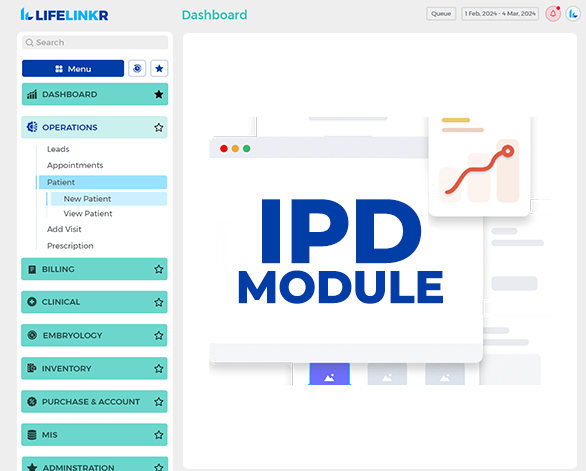
When expertise is reserved for clinical judgement rather than administration, clinics become more efficient, scalable, and patient-focused. And with the support of integrated solutions like LifeLinkr IVF software, protecting clinical time becomes not just possible, but sustainable.