



Key financial metrics every IVF clinic owner should review monthly

Key financial metrics

Table of Contents

Introduction

IVF clinics operate with complex pricing, long treatment cycles, and high fixed costs. Financial performance cannot be understood accurately through annual reviews alone. By the time year-end numbers are reviewed, many problems have already become expensive to fix.

Monthly financial reviews give clinic owners visibility and control. They help identify revenue gaps, rising costs, and operational inefficiencies early. Clinics that review the right financial metrics every month make better decisions, protect margins, and grow more sustainably.

Why Monthly Financial Reviews Matter in IVF Clinics?

IVF clinics differ from other outpatient practices in how revenue and costs behave. Payments may be collected in advance, partially, or in stages. Cycles may be cancelled or modified. Add-on services are often delivered across departments.

Monthly financial reviews help clinics:

  • Detect revenue leakage early

  • Identify rising costs before margins erode

  • Monitor collections and cash flow closely

  • Align operational decisions with financial impact

  • Reduce dependency on year-end corrections

Without monthly reviews, clinics often react too late.

Monthly Revenue and Revenue Mix

Total monthly revenue is important, but it does not tell the full story. Clinics should always analyse where revenue is coming from.

Revenue categories may include:

  • Consultations

  • IVF and ICSI cycles

  • Diagnostics and scans

  • Medications

  • Add-on services

  • Cryopreservation and storage

Shifts in revenue mix often indicate:

  • Changes in patient demand

  • Increased discounting

  • Overreliance on lower-margin services

A healthy clinic understands not just how much it earns, but how it earns it.

Revenue per Cycle and Case Mix

Revenue leakage is common and often invisible. It occurs when clinical or lab services are delivered but not billed correctly.

Common sources of leakage include:

  • Missed add-ons

  • Incorrect package mapping

  • Manual billing errors

  • Documentation delays

Monthly review of leakage prevents long-term margin loss. Even a small leakage percentage can translate into significant revenue loss over a year.

Revenue Leakage and Unbilled Services

Revenue leakage is one of the most common hidden financial issues in IVF clinics. It occurs when services delivered are not billed or are billed incorrectly. Monthly tracking of unbilled procedures package variances and manual adjustments helps identify gaps between clinical activity and financial capture. Even small leakage percentages materially impact profitability.

Collections and Outstanding Receivables

Billed revenue is only meaningful when it is collected. Clinics should review collections every month, focusing on:

  • Billed vs collected amounts

  • Outstanding patient balances

  • Ageing of receivables

  • Payment delays

Poor collections often reflect unclear billing communication or process gaps, not patient unwillingness to pay. Early correction improves both cash flow and patient trust.

Operating Costs and Cost Structure

IVF clinics carry significant fixed costs, including rent, equipment, and core staffing. Monthly cost reviews help ensure these costs remain predictable.

Variable costs such as consumables and outsourced services should scale with volume. Unexpected increases often signal inefficiencies, wastage, or workflow breakdowns.

Staff Costs and Productivity Ratios

Staff costs are typically the largest expense category. Owners should track staff costs as a percentage of revenue and relate them to output such as cycles completed or patients managed. Rising staff costs without corresponding output growth may signal scheduling inefficiencies role overlap or underutilisation rather than overstaffing.

Laboratory and Consumable Costs

Embryology labs drive both outcomes and costs. Monthly review of consumable usage media wastage cryostorage expenses and equipment maintenance costs helps maintain margin control. Tracking lab cost per cycle provides better insight than absolute spend alone.

Monthly Profitability and Margins

Gross and net margins should be reviewed monthly not annually. Margin erosion often occurs gradually through small cost increases discounting or leakage. Monitoring trends helps owners intervene early. A profitable month does not guarantee a healthy trend if margins are shrinking.

Capacity Utilisation and Idle Cost

Unused capacity is a hidden cost. Idle operating theatres unused lab time and underbooked clinician schedules still incur fixed expenses. Reviewing utilisation metrics alongside financials helps owners understand whether costs are being absorbed efficiently or whether growth is required to justify current capacity.

Cash Flow and Liquidity Position

Cash flow keeps clinics operational. Monthly tracking should include:

  • Cash inflows and outflows

  • Timing mismatches

  • Available reserves

Even profitable clinics can face cash stress if collections lag behind expenses.

Single month snapshots are less useful than trends. Owners should compare metrics month over month and year over year. Trends reveal structural shifts that isolated figures cannot. Consistent review builds financial intuition and supports confident decision making.

Key Financial Metrics at a Glance
Metric What It Reveals Why It Matters
Revenue per Cycle Pricing and billing effectiveness Protects margins
Revenue Leakage Missed or incorrect billing Prevents hidden losses
Staff Cost Ratio Labour efficiency Controls largest expense
Lab Cost per Cycle Consumable efficiency Maintains profitability
Collections Rate Cash realisation Supports liquidity
Common Financial Review Mistakes

Common mistakes include:

  • Reviewing only total revenue

  • Ignoring leakage and collections

  • Relying only on accountants without operational context

  • Reviewing finances quarterly or annually instead of monthly

Financial metrics are management tools, not just compliance reports.

FAQs
Do small IVF clinics need monthly reviews?

Yes. Smaller clinics have less margin for error. Monthly reviews help identify issues early before they impact cash flow or growth.

Should clinicians be involved in financial reviews?

Selected metrics can help clinicians understand how operational decisions affect costs without compromising care quality.

Are annual audits sufficient?

No. Audits confirm accuracy but do not support ongoing decision-making or operational improvement.

Conclusion

Monthly financial reviews give IVF clinic owners clarity, control, and confidence. By tracking the right metrics regularly, clinics can identify risks early, protect margins, and align operations with financial outcomes.

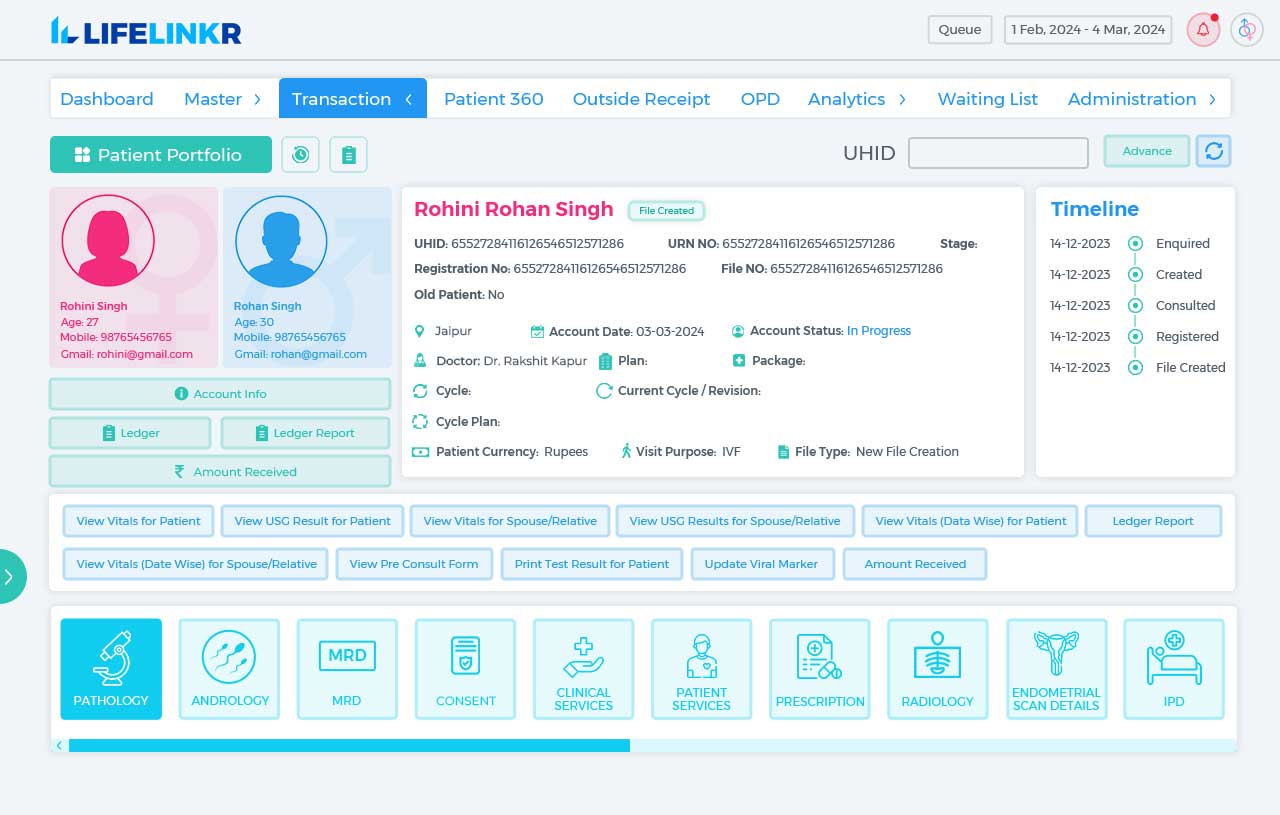
With IVF software like LifeLinkr, clinics gain accurate, real-time visibility into revenue, costs, and collections. This enables sustainable growth, better investment decisions, and consistent, high-quality patient care without financial surprises.

PR & Marketing Manager at LifeLinkr, leading brand communication and strategic campaigns in the IVF industry to enhance engagement and drive impactful growth.