



What makes a software decision successful in healthcare settings
Table of Contents
- Introduction
- Why Software Decisions Are Different in Healthcare
- Defining What “Successful” Really Means
- Alignment With Clinical Workflows
- User Adoption and Usability
- Change Management and Training
- Data Security Privacy and Compliance
- Interoperability and Integration
- Scalability and Long Term Viability
- A Practical Framework for Better Software Decisions
- Why Software Decisions Often Fail
- FAQs
- Conclusion
Introduction
Software plays a central role in modern healthcare delivery. From patient records and clinical documentation to scheduling billing and analytics digital systems shape how care is delivered every day. Yet despite significant investment many healthcare organisations struggle to realise the full value of their software decisions. Systems are underused workflows become more complex and staff frustration increases. A successful software decision in healthcare is not about choosing the most advanced technology. It is about selecting and implementing systems that genuinely support clinical care operational efficiency and long term sustainability.
Why Software Decisions Are Different in Healthcare?
Healthcare environments are fundamentally different from most other industries. Patient safety regulatory compliance data privacy and clinical accuracy are non negotiable. Decisions must account for multidisciplinary teams time critical workflows and ethical responsibility. Unlike other sectors where inefficiency may affect profit alone poor software decisions in healthcare can impact patient outcomes trust and safety. This complexity makes thoughtful software selection essential rather than optional.
Defining What “Successful” Really Means
Many organisations define success too narrowly focusing on whether a system went live on time or within budget. In healthcare success should be measured by outcomes. A successful software decision improves care delivery reduces errors supports staff and integrates smoothly into daily operations. It enables clinicians to spend more time with patients rather than navigating screens. Long term adoption and value matter more than short term implementation milestones.
Alignment With Clinical Workflows
One of the most critical factors in software success is how well the system aligns with real clinical workflows. Software should support how care is actually delivered rather than forcing clinicians to adapt unnaturally. Poor alignment leads to workarounds duplicate documentation and frustration. Successful systems reflect clinical logic support decision making and reduce cognitive load. When workflows feel natural adoption improves and errors decline.
User Adoption and Usability
Even the most powerful system fails if users avoid it. Usability plays a major role in adoption. Healthcare professionals operate under intense time pressure. Systems must be intuitive fast and reliable. Successful software decisions prioritise user experience across all roles including clinicians nurses administrative staff and leadership. When users feel supported rather than slowed down by software engagement increases organically.
Change Management and Training
Software implementation is as much a people challenge as a technical one. Resistance often stems from uncertainty fear of inefficiency or lack of confidence. Successful healthcare organisations invest in change management. This includes clear communication role based training realistic timelines and ongoing support. Training should focus on real scenarios rather than generic features. When staff understand both the purpose and practical value of the system adoption improves significantly.
Data Security Privacy and Compliance
Healthcare software decisions must prioritise data protection. Patient data is highly sensitive and subject to strict regulations. Successful systems embed security and compliance into their architecture rather than adding them as afterthoughts. Features such as role based access audit trails encryption and secure backups protect both patients and organisations. Confidence in data safety builds trust among staff patients and regulators.
Interoperability and Integration
Healthcare rarely operates within a single system. Laboratories imaging platforms billing tools and external registries must work together. Software decisions succeed when systems integrate smoothly and share data reliably. Poor interoperability leads to manual data entry fragmented records and errors. Successful organisations evaluate how new software fits into the broader digital ecosystem rather than treating it as an isolated tool.
Scalability and Long Term Viability
A system that works today must also support tomorrow’s growth. Healthcare organisations evolve through increased patient volume new services regulatory changes and organisational expansion. Successful software decisions consider scalability from the beginning. Systems should handle growth without significant performance degradation rework or replacement. Long term vendor stability roadmap clarity and support quality are also critical factors.
A Practical Framework for Better Software Decisions
Healthcare organisations can improve decision making by asking the right questions:
- Does this software align with real clinical workflows
- Will it improve efficiency without compromising safety
- How easily will staff adopt and use it daily
- Does it support compliance and data security by design
- Can it integrate with existing systems
- Will it scale with future growth and complexity
Using this framework shifts focus from features to outcomes.
Why Software Decisions Often Fail?
Most failures are not caused by poor technology but by poor decision processes. Common issues include selecting software without clinician input underestimating training needs prioritising cost over fit and ignoring long term implications. Treating software selection as a procurement exercise rather than a strategic decision leads to underperformance. Awareness of these pitfalls improves success rates significantly.
FAQs
Is cost the most important factor in healthcare software decisions?
No. Total value usability safety and long term sustainability matter far more than upfront price alone.
Should clinicians be involved in software selection?
Yes. Clinician involvement ensures workflow alignment and improves adoption.
Can a poor software decision be corrected later?
Sometimes but correction is often costly disruptive and risky which makes getting it right early essential.
Conclusion
A successful software decision in healthcare is not defined by technology alone. It is defined by alignment with care delivery usability for staff strong data protection long term adaptability and the ability to support highly specialised clinical environments. This is particularly true in areas such as fertility care where workflows are complex outcomes are emotionally significant and precision is critical at every stage of treatment.
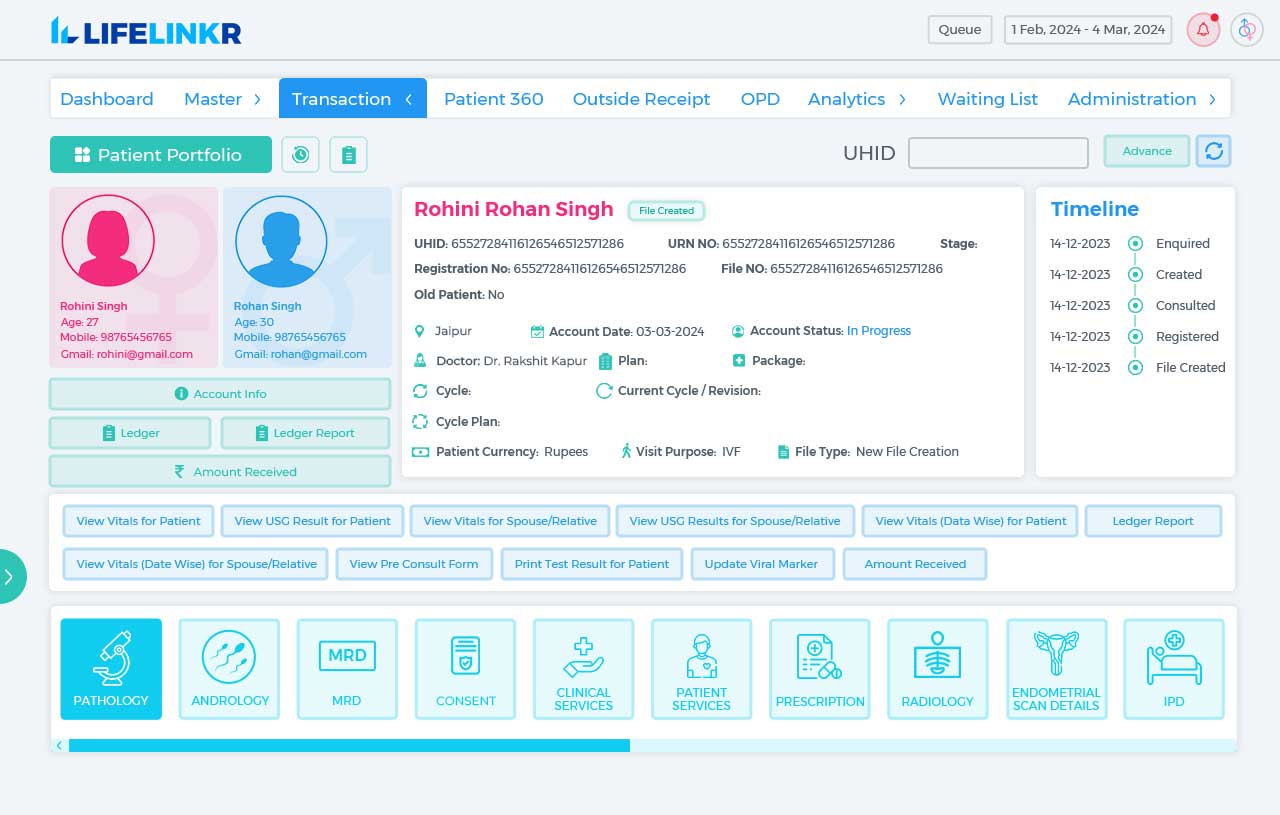
IVF clinics require software that can manage intricate clinical protocols patient journeys laboratory processes and regulatory requirements without adding administrative burden. Purpose built IVF software such as LifeLinkr demonstrates how thoughtful design can directly support clinical excellence. By aligning closely with fertility workflows LifeLinkr enables clinics to manage patient data treatment cycles laboratory tracking compliance reporting and team coordination within a single integrated system. This reduces fragmentation improves visibility and allows clinicians to focus more fully on patient care.