


How technology becomes a competitive advantage for IVF clinics

Technology in IVF Clinics

Table of Contents

Introduction

The IVF landscape is becoming increasingly competitive. Patient awareness is rising, regulatory expectations are tightening and clinics are expected to deliver both excellent clinical outcomes and seamless patient experiences. In this environment, technology is no longer just a support function. It has become a core differentiator. IVF clinics that use technology strategically gain operational clarity, financial control and patient trust. Those that rely on fragmented systems or manual processes often struggle to scale and sustain quality.

Technology becomes a competitive advantage when it strengthens decision making, reduces dependency on individuals, improves patient communication, and creates consistency across complex workflows. For IVF clinics, where treatments are time sensitive and emotionally charged, the right technology directly impacts outcomes and reputation.

The Changing Competitive Landscape for IVF Clinics

Fertility patients today have more choices than ever. They compare clinics online, read reviews, evaluate transparency, and expect clear communication throughout their journey. At the same time clinics face pressure to manage higher patient volumes, complex treatments, and tight margins. Clinics that rely on manual processes or fragmented systems often struggle to keep up. Those that use technology strategically gain speed, consistency, and clarity across operations, which directly impacts competitiveness.

Why Technology Is More Than Digitisation

IVF clinics are unlike general healthcare practices. Each patient journey includes multiple phases such as consultations, diagnostics, stimulation monitoring, procedures, laboratory work, cryostorage, billing and follow ups. These steps are handled by different teams including clinicians, embryologists, nurses, counsellors and administrators.

When information is scattered across spreadsheets, paper files, or generic EMRs, clinics face gaps in visibility and coordination. Errors, delays and inefficiencies increase. High performing clinics use technology to connect these workflows into a single system that reflects how IVF care actually operates. This alignment is the foundation of competitive advantage.

Technology as a Differentiator in Patient Experience

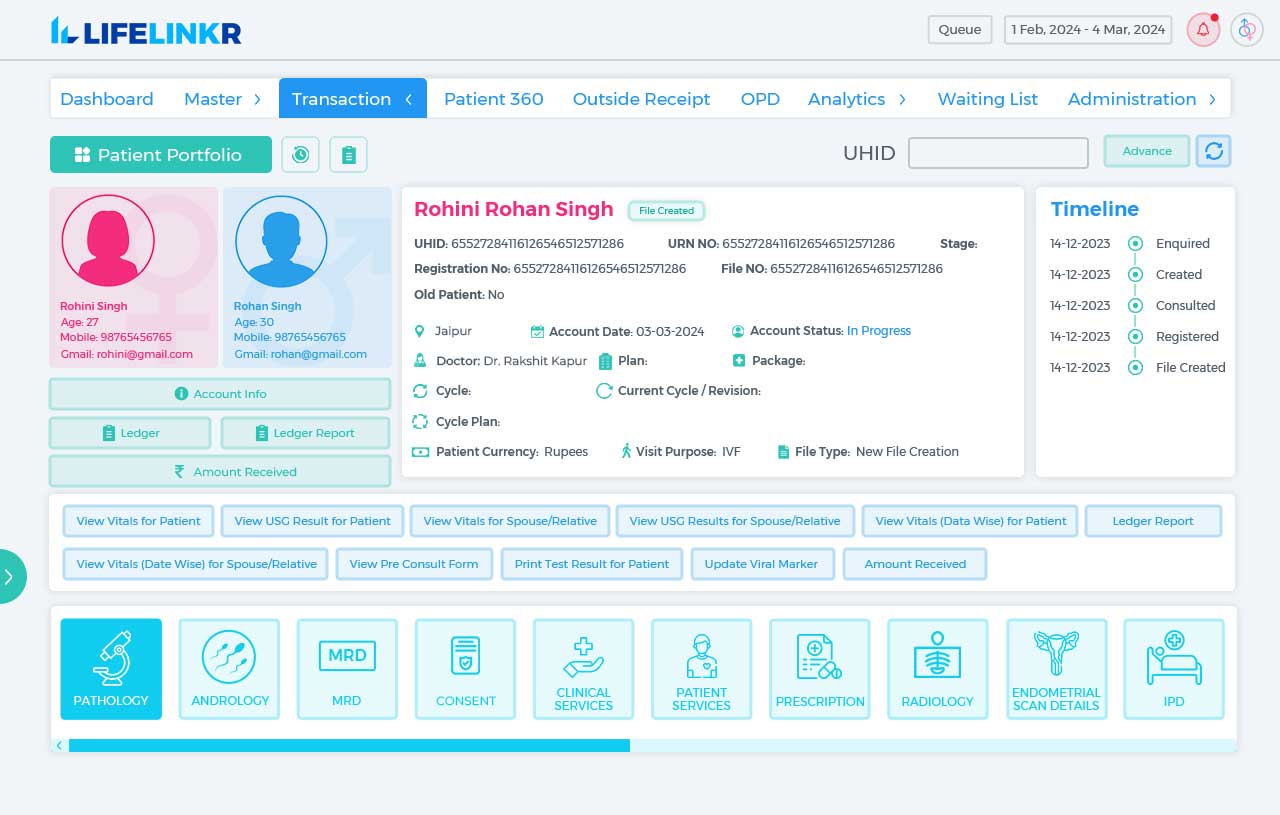
One of the biggest advantages technology provides is visibility. Clinics that operate without real time insight into patient cycles, laboratory activity, approvals, and billing are forced to react after problems occur. High performing IVF clinics use integrated IVF software to view the entire patient journey in one place.

End to end visibility allows leadership teams to answer critical questions instantly. Which cycles are active. Which procedures are pending approval. Which charges are incomplete. Which patients need follow up. This clarity reduces uncertainty and enables proactive management instead of firefighting.

Driving Operational Efficiency With Technology

Operational efficiency directly affects profitability and staff wellbeing. Technology automates repetitive tasks such as scheduling, documentation, billing, and reporting. This reduces administrative burden and frees clinicians and embryologists to focus on patient care. Efficient operations also reduce cycle delays and bottlenecks, allowing clinics to handle higher volumes without increasing stress or errors.

Improving Clinical Accuracy and Safety

IVF treatments are complex and time sensitive. Small mistakes can have serious consequences. Technology supports clinical accuracy through standardised protocols, validation checks, alerts, and traceability. Digital workflows reduce reliance on memory and handwritten notes. When systems guide teams through each step consistently patient safety improves and risk decreases.

Using Data Visibility for Better Decisions

High performing clinics use data to guide decisions rather than intuition alone. Technology provides real time visibility into cycle status, laboratory workload, success rates, cancellations, and financial performance. This allows leadership to identify issues early, allocate resources effectively, and improve outcomes. Data driven clinics respond faster and plan more confidently than those operating in the dark.

Scaling Without Losing Control

Growth is a goal for many IVF clinics, but unmanaged growth creates chaos. Technology enables clinics to scale in a controlled way. Standardised workflows, automated checks, and clear visibility ensure quality remains consistent as volume increases. Clinics that scale without strong systems often experience rising errors, burnout, and patient dissatisfaction. Those with the right technology scale smoothly and sustainably.

Reducing Dependency on Individuals

Many clinics rely heavily on a few experienced individuals who hold critical knowledge. This creates operational risk when staff are absent or leave. Technology embeds knowledge into processes, protocols, and systems. This reduces dependency on individuals and ensures continuity of care. Clinics become more resilient and less vulnerable to staff turnover.

Strengthening Compliance and Audit Readiness

Regulatory compliance is non negotiable in fertility care. Technology supports compliance through audit trails, standard documentation, access controls, and traceability. Digital records are easier to retrieve and review during audits. Clinics with strong systems spend less time preparing for inspections and face fewer compliance risks.

Why IVF Software Creates a Competitive Edge

Specialised IVF software is designed around the unique complexity of fertility care. It connects patient journeys, cycle tracking, laboratory workflows, consents, billing and reporting in one platform. Unlike general systems, IVF software reflects real clinical workflows. This alignment reduces friction, improves adoption, and delivers measurable competitive advantages in efficiency, quality, and patient trust.

Long Term Business Benefits

Clinics that invest in technology as a strategic asset experience long term benefits:

  • Higher patient satisfaction and loyalty
  • Improved clinical outcomes and safety
  • Lower operational costs
  • Reduced staff burnout
  • Stronger compliance posture
  • Sustainable and controlled growth

FAQs

Is technology only useful for large IVF clinics

No. Technology benefits clinics of all sizes by improving efficiency consistency and patient experience even at early growth stages.

Can technology replace clinical expertise

No. Technology supports clinicians by reducing errors and workload but clinical judgement remains essential.

How quickly can clinics see benefits

Many clinics see operational and communication improvements within months of implementing the right technology.

Conclusion

Technology becomes a competitive advantage for IVF clinics when it is purpose built, integrated, and thoughtfully implemented. It strengthens visibility, consistency, patient trust, financial control and scalability. In a field as complex and sensitive as reproductive healthcare, clinics that invest in the right technology position themselves for sustainable growth and long term leadership.

In the coming years, success in IVF will belong to clinics that combine clinical excellence with operational intelligence. Technology is no longer optional. It is the backbone of competitive advantage.

PR & Marketing Manager at LifeLinkr, leading brand communication and strategic campaigns in the IVF industry to enhance engagement and drive impactful growth.